 The member diversity in the WNBA makes our goal of connecting, educating, advocating, and leading possible. As bookwomen, we believe “Books Have Power.” The Bookwoman welcomes Lisa Braxton (Boston), WNBA-Boston’s board member-at-large, to the “Power behind the WNBA” interview series!
Tell us about yourself.

I’m a former president of the Boston chapter of WNBA and a current board member at-large. I am a novelist, short-story writer, and essayist. My debut novel, The Talking Drum, will be published by Inanna Publications of Toronto in the fall of 2019. I’m a 2018 recipient of the Kimbilio Fiction Writers Fellowship.
My stories and essays have been published in anthologies, magazines, and literary journals including Vermont Literary Review, Clockhouse, Northwestern University Magazine, Chicken Soup for the Soul, The Book of Hope,and Black Lives Have Always Mattered. I received Honorable Mention in Writer’s Digest magazine’s eighty-fourth and eighty-sixth annual writing contests in the inspirational essay category. I am also a former newspaper reporter and television news reporter and anchor who was nominated for an Emmy award during my television career. I earned a Bachelor of Arts degree in Mass Media from Hampton University, a Master of Science degree in Journalism from Northwestern University, and a Master of Fine Arts degree in Creative Writing from Southern New Hampshire University. My website: www.lisabraxton.com.
Why did you join the WNBA?
About thirteen years ago, I told a coworker about the one short story I had gotten published years earlier in a small literary journal in Georgia called Snake Nation Review, my interest in getting more stories published, and my hope to one day write a novel. She told me about the WNBA’s Boston chapter, and I joined. I wasn’t in the organization very long before I volunteered to be recording secretary and newsletter editor. Over the next year or so, I was appointed chapter vice president to take over for someone who couldn’t fulfill her term. Then I ran for president and served two terms. As president, I attended the national conference (one year it was in Manhattan; another year it was in Nashville) where I was able to strengthen my leadership and organizational skills. I learned so much from my fabulous peers—those who were fellow chapter presidents as well as those serving as national officers.
As mentioned in my bio, my debut novel will be published in September 2019. I don’t know if this would have happened without the WNBA! A few years ago at a WNBA-Boston networking event, I met literary agent Amaryah Orenstein, who later became co-president of the chapter. I told her about my manuscript, and she agreed to take a look at it. Over the course of the next several months, she had me revise it under her guidance. Ultimately, she chose not to represent me, but I feel that the revisions I made while I was working with her helped me get the manuscript into much better shape. I continued to revise it over the next several years until Inanna Publications agreed to offer me a contract.
What value does the promotion of books bring to your community?
My town’s “Friends of the Library” group promotes books in my community by hosting readings. The group is able to attract high-profile authors who draw enough interest that the town often opens up the high-school gymnasium in order to accommodate all of the residents who wish to attend the readings. “Friends of the Library” also hosts authors—both prominent and lesser known—from the community at the local libraries for a reading series. This gives authors at all levels a chance for exposure and provides an opportunity for the reading community to get to know them.
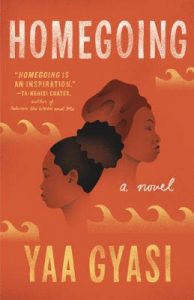 Share a book that has had a lasting impression on you and why?
Homegoing by Yaa Gyasi
The novel begins with two half sisters in eighteenth-century Ghana and follows their descendants to the present day. The novel traces the legacy of slavery and colonization. Early on, it depicts Africans being kidnapped and put into dungeons before being shipped out, some to American slave plantations. I literally felt physical sensations to the core of my being as I read this novel and had to put it aside and take a break from it several times. I thought to myself, This is my story! My grandparents, five generations ago on my father’s side, worked on a plantation in Nelson County, Virginia. I thought about the fragments of Nat and Peggy Braxton’s story that have been passed down through family history and the parallels between their story and the sense of loss felt by the slave characters in Homegoing. Once they landed on America’s shores, the characters in Homegoing, as well as my ancestors, were forced onto the other side of what I would describe as an “iron wall”—their culture, language, family, and community stripped away from them. As I read, I grieved for my ancestors—the ones screaming in terror as their loved ones were ripped from their African villages, as well as the ones who were abducted and who had no idea the kind of hell that awaited them.

Interview compiled by assistant editor Pam Ebel (New Orleans).
Leave a Reply